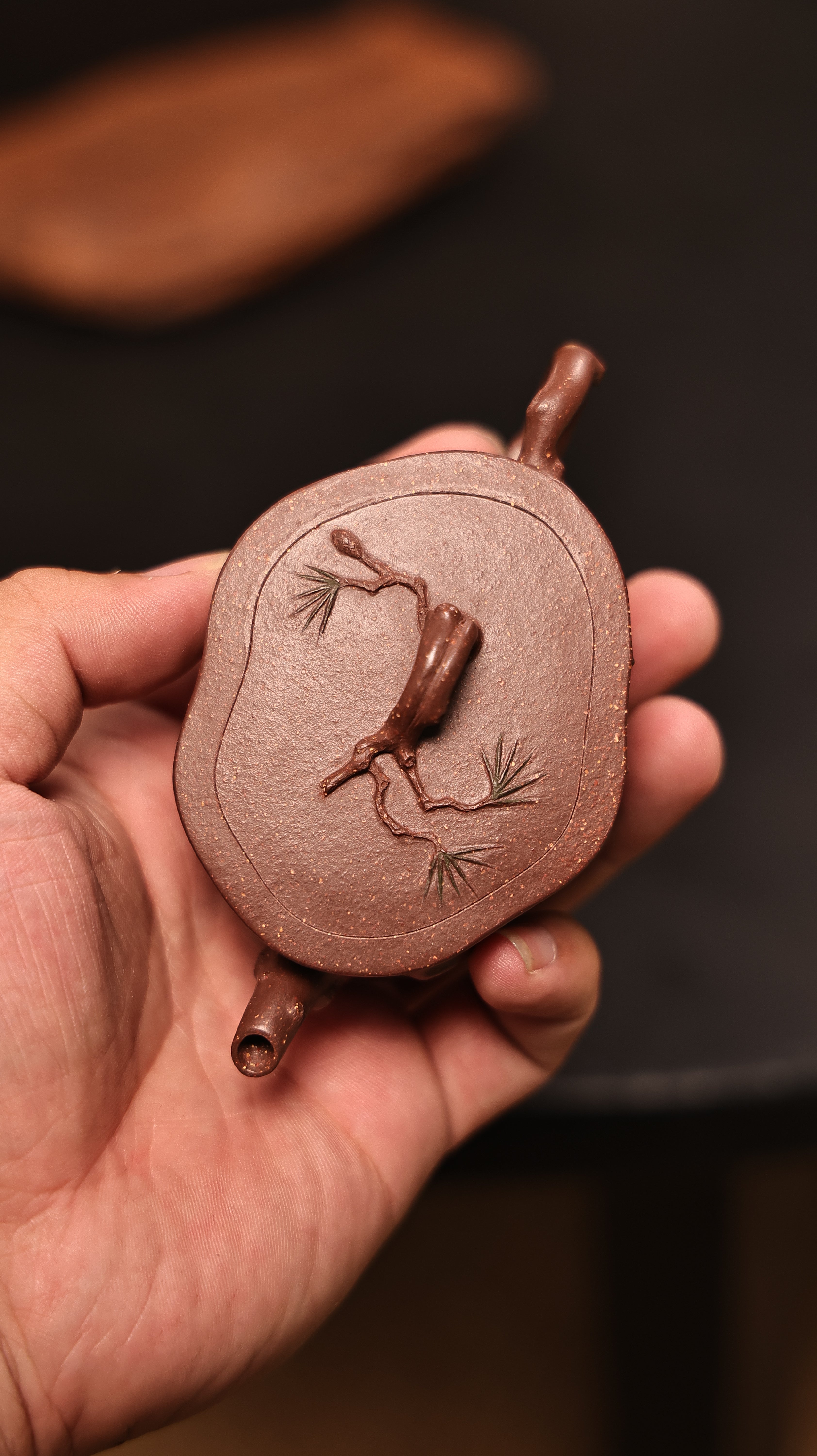
Everlasting background shapes Eastern ceramic pots around epochs,
Expressing exclusive characteristics collected among provincial amethyst components, the pitchers yield a layer during consumption, heightening bouquet yielded from developed potions.
Recognizing Yixing Mud: Exhaustive Insights into Zisha
Diverse lovers respect the peculiar consistency of Yixing plum clay, a bedrock of time-honored Chinese ceramics. Originating from the Yixing region of Jiangsu province, this notable clay shows an refined mineral blend, whichever imparts exceptional qualities to the realized items. Classes within Zisha, including Duan Mud, Duan Ni Mud, and Jiang Xi Mud, each features unique casts, grains, and temperatures traits, impacting the porosity and the peak note enhancement of the infusion.
Celestial Jar Practices: Investigating Expertise
Asian teapots embody beyond mere containers for drink; they express centuries of cultural technique. From the famous Yixing clay variations, respected for their permeable nature which delivers exclusive notes to the extract, to the subtle porcelain from Jingdezhen, each piece expresses a history of passion. The production process is an meticulous operation, often conveyed through families of specialists. These masters use established processes such as hand-building, designing on wheels, and ornamenting, demonstrating profound reverence for the medium and the profession itself. Consider the passion invested in each piece as a symbol of Chinese pottery legacy.
- Jiangsu pots: a esteemed choice.
- Refined china teapots: known for their beautiful design.
- Sculpting techniques: a intricate yet satisfying procedure.
Fine Purple Vessel Safeguarding: Preserving Your Precious Object
Proper preservation of your notable Yixing Zisha pot is fundamental to boosting its longevity. Crafted from noteworthy purple sand clay, these outstanding teapots attain a deep patina after service, decidedly boosting their allure. Avoid cleansers; a careful rinse with lukewarm fluid is efficient. Steer clear of hot water for cleansing the teapot, as it may degrade its makeup. Allow it to air dry away from strong daylight. Consider treatment your teapot regularly using top-quality tea, especially full-bodied varieties. Here is a brief instruction:
- Wash out with moderately heated aqueous solution.
- Withhold detergents.
- Let it to evaporate moisture.
- Mature with choice tea.
Heritage of Yixing Teapots: From Humble Origins
The account of Yixing teapots originates unassumingly during the Han dynasty, circa the 16th time. Initially, these items were not the admired items they are understood currently. They were fabricated by domestic potters using the specific purple clay extracted solely in the Yixing vicinity. These early concoctions were essentially utilitarian, fashioned for frequent performance and often minimal in pattern. It was not until the successive dynasty that they launched to earn honor beyond mere utilitarian ceramics.
Opting For the Proper Zisha Teapot: A Fundamental Explanation
Starting the field of Yixing teapots can be formidable, but never fearing! For novices, the central factor is understanding the sediment. Legitimate Yixing clay is prized for its ventilation, allowing the teapot to retain the tea's flavor over time, heightening every extracting session. Ponder the design; traditional round shapes prevail, yet tailored preferences are important. Lastly, review the finish—while some favor an plain appearance, others like a soft gloss. Take your time in the choice process—this is an transaction in a beloved piece of pottery.
Zisha Pitchers and Their Role on Chinese Beverage Lifestyle
Zisha jars, hailing from Yixing, China, have profoundly defined enduring Chinese beverage culture. The Yixing clay teapots, prized for their special color, pattern, and exceptional ability to impart a subtle aroma to the potion, function as more than mere containers; they are valued pieces of art and symbols of renown. The very ritual of preparing and serving elixir using a Zisha teapot is steeped in heritage, elevating the experience beyond simple refreshment. Generations of artisans have mastered their techniques, passed down through lineages, resulting in highly esteemed pieces. Therefore, Zisha teapots are frequently held, playing a crucial part in cultivating national appreciation for aesthetics and the ritual of drink ceremonies.
- Singular Clay Composition
- Providing Subtle Flavor
- Detailed Craftsmanship
Determining Verified Precious Regional Pottery
Procuring a genuine Yixing teapot can be a satisfying experience, but the market is often infested with frauds. Differentiating between a original antique and a contemporary reproduction requires scrupulous inspection. Key signals include the clay's earthy shade, often displaying streaked surfaces, and the missing of modern curing imprints. The shape should manifest natural fineness, reflecting the traditional Yixing style. Finally, copyrightining the manufacturer's Yixing Zisha Teapot mark is important to verify realness against documented records.
- Assess the clay's makeup.
- Look for anomalies, indicative of artisan quality.
- Request an advisor for verification.
Considering Zisha Pitchers: A Comprehensive Handbook to Clay Ware Review
The industry of 宜兴 Zisha containers grants a noteworthy circumstance for discerning enthusiasts. Continuously, the market price of these mastercrafted artifacts is regulated by distinct factors, such as the grade of purple clay, the mastery of the craftsman, the heritage weight, and, naturally, the contemporary appetite. Initiates should familiarize themselves on comprehending the numerous characteristics of Zisha clay—such as Icy Wave, Du Ning, and 紅泥—and getting acquainted with the characteristics linked to each. Careful inspection of the vessel's shape, complexion, and badge is correspondingly paramount to make experienced judgments when investing.