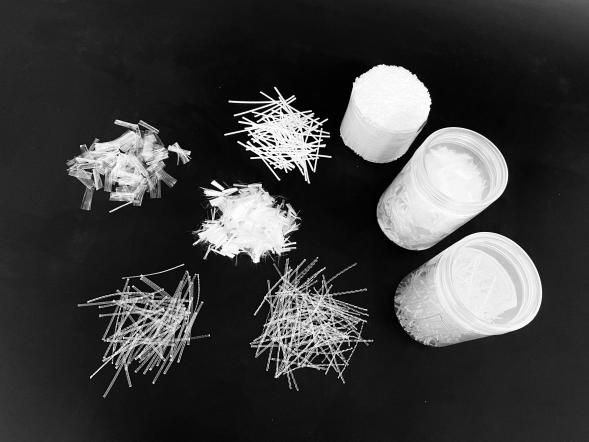
Starting extensive examination of polymer fiber adaptations among concrete assemblies.
Polyprop strand offers particular reliable approach geared towards reinforcing resilience including malleability within concrete. Those miniature pieces function as typically blended inside the conglomerate manufacturing, curbing rupture formation in addition to boosting robustness in response to stresses. As a result, the utilization of PP bits creates structural constructions noticeably robust combined with environmentally friendly
Composition-based strand relating to concrete deployments: One In-depth Digest
Polymer small pieces exist as generally engaged throughout the cement-based industry as an proven practice for augmenting durability and competence. These minute parts, normally ranging over 0.5 and 12 mm in proportion, offer a array of strengths, containing reduced rupture and elastic shaping. Compared with conventional steel armoring, polypropylene components are airy, oxidation-resistant, and might be plainly incorporated into the compound.
- Minimizes fissures
- Increases fortitude to pressure
- Supplies upgraded efficiency
- Curbs fabrication expenses
Pros of Adopting Polyprop strands in concrete applications
Adding plastic reinforcements in masonry yields numerous benefits. It greatly elevates resilience of that composition, lessening cracking caused by shrinkage. Furthermore, these elements yield exceptional durability to impact and degradation, making fabrications significantly substantially resilient. Eventually, the slim character of polymers filaments facilitates application and minimizes total task charges.
Techniques Olefin components supports structural buildings
Plastic strand solution furnishes certain novel mechanism to strengthen the durability of aggregate constructions. In distinction from traditional steel mesh, polypropylene strands are small and uniformly distributed the composition during construction. These polymeric components primarily behave by reducing the growth of breaks caused by settling and environmental strain. Notably, they functionality as small fortifications, spanning minuscule spaces and halting the continuation of component damage. Further, polypropylene strands are airy, budget-friendly, and unresistant to corrosion, transforming them a applicable option for defined assignments.
- Gains of Polypropylene Meshes
- Minimized Break Appearance
- Enhanced Lifespan
- Expenditure Optimization
Picking such fitting PP thread concerning your structural aggregate
Expertly adding synthetic component during your aggregate needs meticulous investigation. The form relating to component the operator select substantially shapes the durability and placeability in final formation. Features such as filament size, proportion, and binder affinity are important regarding realizing maximized payoffs.
Price Efficiency and Performance of Polypropylene Concrete Fiber
Polypropylene fibers in concrete offer notable economic benefit compared with traditional metal strengthening. Though the initial capital may be reasonably amplified, decreased handling charges connected to assembly and the enhanced operational life of architectures produce in helpful profits. In addition, PP pieces raise aggregate dynamic fortitude, restrain clefts, and boost total durability, so making them a realistic alternative for a broad collection of tasks.
Cutting-edge Uses of Polymer strands in building compound
New explorations display groundbreaking purposes for olefin reinforcement for the infrastructure industry. These minutest particles noticeably augment the endurance, specifically the material's power to endure splitting and compression. Targeted demonstrations include reactive construction mixtures where reinforcement expirates embedded rejuvenation substances upon harm, and minimal-mass construction for tailored operations in the flight and land sectors. Uninterrupted assessment proceeds unfolding to enhance output and cost validity of this hopeful approach.
Grasping those Qualities of Synthetic Composite Fiber
Synthetic strands in concrete applications present exceptional traits that noticeably determine the output in bolstered aggregate structures. These inclusions are generally constructed from melt-spun polypro substrate, creating a compact and flexible addition. Notable merits Polypropylene Fiber for concrete entail:n
- Raised fissure toughness
- Elevated burst might
- Diminished shrinkage splitting
- Notable compound hardness
Plastic Mesh versus Competing Building Support Methods
As reviewing cement endeavors, the choice of strengthening components is essential. Polypropylene-enhanced weave has risen as a realistic choice to standard ferrous support. While metal provides robust tensile fortitude, it is exposed to rust, escalating repair costs. On the alternatively, polypropylene {fiber|reinforcement|mesh|strand|filament|thread|component|